
Monday, April 30, 2012

Sunday, November 27, 2011

New York, December 2009
For no apparent reason, I was just remembering the following exchange that occurred between myself and a nightclub DJ while I was out at a rather trendy venue in New York in December 2009 - after I took my friend Andy up on a rather silly, but harmless, drunken dare:
Me: (as a dare) Excuse me - could you play Mariah Carey, All I Want For Christmas is You?DJ: (not listening, or looking at me) I don't do requests.Me: OK, that's quite rude.DJ: (suddenly vicious; turning on me) Would you like it if someone came to your place of work and told you how to do your job?Me: (aggressive; rising to the bait) No, because I'm not a fucking DJ!DJ: Would you like me to get you thrown out? Because I can.Me: (after thinking for a moment) OK, go ahead. It was free to get in, I've almost finished my drink, and I'm certainly not going to stay for the music.
Sadly he didn't follow through on this threat, but we left anyway. I realise you may well think this exchange makes me look rather aggressive and arrogant (in which case, we have probably met), but I'm strangely proud of it. Some blue touch paper within me is lit whenever I encounter what I consider to be genuine unabashed rudeness - which is actually a rarer occurrence than we might expect. What made me see red with that New York DJ was not his refusal to play the song I requested (I didn't actually want to hear it, after all), but his hostile dismissiveness, and the disingenuous way he tried to insist that asking a DJ to play a certain song was not a well-established cultural concept. He could have attacked me for being drunk and/or irritating (both of which would have been perfectly valid) but instead attempted to make a point of re-writing the history of accepted nightclub etiquette. I mean, declining requests is one thing (and perfectly justifiable), but do you think he gets that angry every time anyone attempts to make one? The man must be exhausted, because no matter how dedicated he is to his re-education campaign, he's never going to slow that tide.
Notice how quickly he gets so angry in this short exchange. His three contributions to the conversation represent the qualities: 'dismissive'; 'aggressive'; and 'threatening'. My four on the other hand represent the qualities: 'silly'; 'mildly indignant'; 'counter-aggressive' and 'smug' - not exactly a roll-call of honour, but in my defence: a) I started off friendly, and b) I was not the one operating in a professional capacity at the time.
But I think the thing that ultimately made me feel justified in this brief confrontation was my realisation at the end of it that I didn't care if he 'got me thrown out' - the place was lame, and after talking to him I now definitely wanted to leave. All of his power, and the reason he felt he could be so nasty and contemptuous, was invested in the idea that he had a high status - 'You want to be here, I am the DJ, I choose the records, don't fuck with me or I'll get you thrown out.' It was good old-fashioned bullying. How liberating it was for me (and how undermining for him) to realise that the Emperor had no clothes, and I had no desire to be a part of his miniature fiefdom.
Thursday, November 24, 2011

Sunday, October 30, 2011

Sunday, July 24, 2011
Fade to Black

When Frank was released in 2003, I was living in a shared house in south-east London, and working in a handbag shop in Greenwich marketplace, trying to find a way to break into television production. We would play the album in the shop during long shifts, congratulating ourselves on being into a 'jazz' artist, and relishing the beats and bad language that made the album feel contemporary. We played that CD (CD!) so many times you could see through it, but ultimately it was part of our cultural checking-in; our staked claim to be young and part of the music scene, and the album was always 'one of' those we liked - genuinely admired, but no more so than those by Scissor Sisters, Franz Ferdinand, Kanye West, or The Thrills.
I remember specifically the first time I heard Rehab. Three years later, and Amy Winehouse had more or less dropped off the radar. I was sitting at my computer in my flat in London Bridge, with my back to the television, on which was playing one of the free-to-air digital music video channels - probably The Hits. I was concentrating hard on what I was doing, and the constant music had faded into the back of my mind - but this song wormed its way in within a few lines and grabbed my attention. The smokey voice was familiar - who was that, Lauryn Hill? Turning round to the TV and seeing the singer in the video, I still couldn't work it out. The skinny girl in the beehive didn't look like anyone I recognised. One thing I did know was that the song was amazing. That hook; those beats, those horns. No-one was doing anything like this. As the song ended, the caption came up on screen: 'Rehab, Amy Winehouse'. Amy Winehouse?! The jazz singer? It didn't look or sound anything like her. But no time for that. The next evening I went over to my friend Debbie's house, and thrust my ipod earphones into her hands: "You have to listen to this song, you'll love it". All over London people were asking each other "Have you heard that new Amy Winehouse song?" "Amy Winehouse? Hmm I don't like all that jazz stuff." "No seriously, you really, really have to listen to it..." Clearly my own personal campaign was unnecessary - within weeks the song was massive, and so was the album, Back to Black (Winehouse's profile was so low at the time, the album had been quietly put out before any singles were released).
When you're young and an artist you love goes stratospheric, it's often the cue to cool your affections. The Scissor Sisters were my FAVOURITE BAND IN THE WORLD after I tagged along with my friend Jon to see them at the Astoria in early 2004, not knowing anything about them. But a few years later when they were playing arenas - well, I still liked them, but I didn't go on about it. But Winehouse was different. Me and my friends were obsessed with her. The previous year, we'd all had the Zutons' Valerie on our ipods, but when Winehouse re-recorded it with Mark Ronson, it became an essential track, never leaving the radio for months, played at every party. Out on the town with my friends Nick, Hayley and Liz, we would never get tired of requesting and dancing to her music, and would incessantly quote not just her song lyrics (was there a tragic outfit, a bizarre news story, or an unopenable jar in early 2007 that wasn't met with "what kind of fuckery is this?"), but also her appearances on television shows - repeatedly accessible to us thanks to the emerging website YouTube. She was already a notorious drinker (although the hard drugs - or at least public knowledge about them - didn't come for a few more months), but her wit and vivacity was clear to see. We adored her, and constantly spouted nonsense about having a 'billboard time!', or how we would 'rather have cat aids' than do X - always in a rolling approximation of Amy's harsh north London accent (she was from Barnet, the same place I had been born, and where I had lived until I was seven). It was no doubt irritating to casual observers, but we were bonding over a shared passion, an artist who was not just exciting, but who really felt 'ours'. I guess we were just the right age, and living in the right city.
The music conquered America with ease, but due to drug-related visa issues around the time of the Grammys, she had to perform and accept her five awards via satellite link from London. Like all great stars, somehow she made this awkward situation feel like an advantage. She was an outsider - staying put in the town that made her, despite the laurels Hollywood was throwing at her. As she took trophy after trophy - Song of the Year, Record of the Year, Best New Artist... - she made reference to the freak fire that was at that moment raging through the pubs and market in her beloved Camden. Her success always came hand-in-hand with drama in bizarre forms.
Nick and I snapped up tickets to see Winehouse perform live at Brixton Academy, but (within a year of Back To Black's release) the tour was abruptly cancelled part-way through, as the tabloids detailed Amy's spiralling drug addiction, shambolic performances, and devastation at the imprisonment of her husband Blake. Strange as it seems, from the moment she hit the big-time, she never put out another album.
Although years passed without her releasing any significant new material, she remained a massive star, and an object of our fascination. In June 2008 I was sitting around my kitchen table with friends drinking wine (shortly before moving to Australia) when Nick texted me: 'Turn on ITV'. It was Amy Winehouse in an unannounced performance at Nelson Mandela's 90th birthday concert in Hyde Park. Bizarrely, she sang Free Nelson Mandela, and the performance was less than spectacular, but she'd still had the star power for Nick to instantly prompt someone in another city to make sure they didn't miss seeing her. The following day she performed at Glastonbury, but made the headlines mainly for punching a member of the crowd halfway through one of her songs.
Right up to her death (nearly five years after Back To Black's release), she remained present in our everyday consciousness. Last month, we mounted a parody show at the Adelaide Cabaret Festival called Amy Housewine, Back To Crack. This Friday night at the pub, I was telling my friends to look up her appearance on Never Mind The Buzzcocks on YouTube. On Saturday, DC referenced her version of Valerie when describing to me a track he'd just recorded. On Sunday morning I woke up to the news that she was dead.
Is it melodramatic or narcissistic to suggest that with Amy Winehouse dies a part of my youth? Her death couldn't seriously be described as totally unexpected, but it was still shocking. Like everyone else, I played her music as I went about my business today. Although we'd practically been carrying out drills for years on how we'd feel if and when Amy Winehouse OD'd, it felt not just strange that she was gone, but wrong. I didn't want her to be dead. The music was just too good. Sympathy for the personal tragedy goes without saying, but it's also justifiable for us to consider her death in relation to our own lives. Eric Idle once said that when people told him they wanted to see a Monty Python reunion, what they meant was that they wanted to feel young again. Amy Winehouse's music was such a big part of my identity as someone in my late twenties. If there's no more of her music, then I'm not that same person anymore.
"Life is like a pipe, and I'm a tiny penny rolling up the walls inside."
Amy Winehouse, Back to Black
Saturday, May 28, 2011
And why not?

"On the erection of Cleopatra's needle in London in 1878, a time capsule was concealed in the front part of the pedestal. It contained: A set of 12 photographs of the best looking English women of the day, a box of hairpins, a box of cigars, several tobacco pipes, a set of imperial weights, a baby's bottle, some children's toys, a shilling razor, a hydraulic jack and some samples of the cable used in erection, a 3' bronze model of the monument, a complete set of British coins, a rupee, a portrait of Queen Victoria, a written history of the strange tale of the transport of the monument, plans on vellum, a translation of the inscriptions, copies of the bible in several languages, a copy of Whitaker's Almanack, a Bradshaw Railway Guide, a map of London and copies of 10 daily newspapers."
Wednesday, March 16, 2011

Wednesday, February 16, 2011
The Joy of... Diaries
I'm taking part in a really interesting project at the moment - it's called The Sex Diaries Project. I heard about it on a BBC podcast where they interviewed Arianne Cohen, the woman who initiated it, and essentially it's a web-based way of documenting the sexual lives of lots of different people.

You register on the website and then each day for one week you make entries each time you have a sexual experience, or even think about sex (within reason, obviously - otherwise it would be a full-time job). I've been doing it for a few days, and it's really interesting to find out how strange and awkward it is to document it all! But kind of liberating and cathartic too. Oh, and needless to say - it's all strictly anonymous...
The collected diary entries have already been turned into a book, but the project continues - and I'd encourage you all to sign up. You'll be amazed what you find out about yourself just from writing things down!...

Sunday, February 6, 2011

A Place In The Sun
I just watched A Place In The Sun with my friend Alice.

Alice and I watch a lot of old movies together, and some are better than others. Of course the danger with films from the 30s, 40s or 50s especially is that the acting and storylines can seem very dated and clunky. While this can be avoided by seeking out trusted actors like Bette Davis or Marlon Brando, it's always satisfying to watch a movie that transcends the gap in years and stil holds up today. This was one of them, mainly due to George Stevens' exceptional directing - although the performances were also very good.
I'm a sucker for a melodrama when done well, and would heartily recommend this movie to anyone else of a similar persuasion.


Tuesday, January 11, 2011

Thursday, September 30, 2010

Monday, September 27, 2010
'Coming soon' - or already here? (the sequel)
The Life Of David Gale turned out to be a pretty bad film, but the trailer was really exciting. I guess the issue with a lot of good trailers that turn into bad movies is that in a trailer you just have to show us moments of excitement and tension, with no responsibility to explain the set-ups, etc. When viewing the finished movie, sometimes these same moments can be exposed as contrived, unjustified or unrealistic.
I thought 8 Mile was actually a good movie - although still not as good as the trailer!
Tuesday, September 21, 2010
'Coming soon' - or already here?

Writing my post the other day about titles raised some questions in my mind about the nature of art. Can the title of a book, movie, song, or similar have a kind of artistic merit by itself, regardless of the quality (or otherwise) of the work it describes? Most of the examples I gave were titles that appealed to me because they triggered something in my mind - a memory, or the recognition of an emotion from the past - that might have nothing to do with the content of the work.
I have similar feelings about movie trailers. Occasionally I see a trailer that appeals to me as something to watch on its own (although the difference is that if I like a trailer it almost inevitably makes me want to watch the movie). For instance, take a look at this trailer for Kenneth Branagh's 1996 version of Hamlet, and see how exciting it is:
The cast! The music! The colour and movement! The action! ... The cast! The movie itself turned out to be pretty good, but who would want to sit through a four-hour unabridged version of Shakespeare's longest play, when you can see all the best shots, and glimpse all the big stars, in a minute and a half? I was 15 years old when I first saw this trailer, and I remember it leaving me breathless with excitement. I wanted to watch it over and over again. I kind of still do.
But the tone and mood of a trailer can often be surprisingly different from that of the film in its entirety. For instance, the trailer for Baz Luhrmann's Australia:
gave the impression of an old-fashioned sweeping epic in the style of Old Hollywood. So, on watching the movie I was very surprised to see it incongruously infused with Luhrmann's trademark slapstick elements, speeded-up camera footage, etc. I loathed Australia-the-movie. So much. One day I may write a post about it - called Baz Luhrmann earned my trust and then abused it spectacularly, leaving me feeling depressed, confused and angry.
Another favourite of mine - and an example of a great trailer that promotes a mediocre movie - is this one, for 1997's Paradise Road:
Doesn't it look great? Corny, sure - but all those great actresses; a rollicking great war story; triumph over adversity (through art!) - how could you not be thrilled? In fact, it was pretty average. But even knowing that, I still find the trailer exciting.
Then there's the old disguising-the-fact-that-this-movie-has-subtitles trick:
In fact, I thought 8 Women was a really fun movie, and would recommend it to anyone, but I do think it's strange that the only line of dialogue in the trailer is the isolated (and dramatically irrelevant) moment when one of the characters says "That is the question" in English - and that the rest of the plot is covered by an (English-language, naturally) voice-over. That's like advertising an American movie in France, and including a random shot of someone saying "C'est la vie!". It seems to be trying too hard to say 'Look! This movie is accessible to you!", rather than concentrating on what really makes the film appealing.
All of the points mentioned above hinge around one major issue - the fact that a trailer is not created as a piece of art, but as a promotional tool - no matter how noble the film-makers' intentions, and no matter how free from studio interference they have been, the trailer is always created entirely to persuade people to shell out and buy a ticket. Does this mean there can be no artistic merit?...
The most exciting trailer around at the moment (for my money) isn't for a movie at all, but a TV series - Boardwalk Empire. The first episode was broadcast a couple of nights ago in America, so we'll soon see whether it lives up to the trailer's promise...
Gimme More

I'm very excited about taking Britney Spears: The Cabaret to Melbourne in October. This remarkable little gem of a show was written by Dean Bryant as a one-woman show for the incredible Christie Whelan - originally for the Adelaide Cabaret Festival 2009. We at Luckiest Productions have been fortunate enough to produce the show in Sydney last year, and now an upcoming season at Chapel off Chapel in Melbourne.
The show is a brilliant and multi-layered piece, which is both a satire (of Spears's public image, and of wider celebrity culture) - but also an attempt to make audiences empathise with the girl in the spotlight (not an easy task for a writer or performer where this girl is concerned!) A large part of the success of the show is the incredible job Musical Director Mathew Frank has done of adapting Britney's perky, sexy, and over-produced pop songs into cabaret numbers - from a slow and stripped-down Toxic, to a version of Slave 4 U which gives a glimpse into Britney's life as a hard-working and strangely sexualised child star on The Mickey Mouse Club. The way that Christie scales this range of moods and emotions in her performance is testament to her considerable acting talent, as well as her versatility as a singer, dancer and comedienne. One of the most common reactions from people who've seen the show is that they expected to laugh, but were shocked that they ended up crying too. It takes you on a journey - as any piece of art should - and works in many ways more like a piece of theatre than a cabaret show.
One of the best things about being a producer is being able to take shows that you believe in, and try to bring them to wider audience. It's really rewarding working on Britney Spears: The Cabaret because I'm so confident that every person I get through that door will walk out satisfied and fulfilled.
I'm also looking forward to spending three weeks living in Melbourne while the show is on - a lot of my friends are living down there at the moment, but I have a complicated attitude towards that city. But that's for another blog!
Friday, September 17, 2010

Wednesday, September 15, 2010
On Titles
I've been thinking today about titles. Titles of books, films, albums, etc have always been important to me, and sometimes a good title will stay with me for a long time, even after I've forgotten much about the work it describes (or perhaps never seen/read/heard it). It's very hard to describe why a title has an effect on us - it can be penetrating, or humorous, or surprising... I guess any memorable title is something that contains a truth that jumps out at us and helps us to relate to something in our own life in some small way. In that respect I suppose a good title has the same qualities as any good piece of art, only in miniature.
I know that when I was coming up with a title for this blog I spent a whole evening mulling over various alternatives, before eventually settling on the above pun because I felt it encapsulated the melding of high and low culture that I wanted to explore.
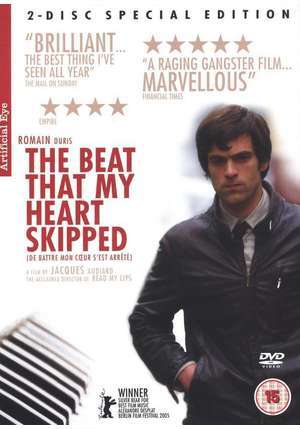
Here are some of my favourite titles. As for the works they describe - some of them I love with all my heart, some I quite like, and some I am completely ambivalent about....


Monday, September 13, 2010
Leslie Howard, I want to be like you...

"Howard was one of early twentieth century Britain's most revered actors and matinee idols ... He usually served as producer and/or director of the Broadway productions in which he starred. He was also a playwright ... His Hollywood roles included Professor Henry Higgins in the film Pygmalion, for which he was nominated for an Academy Award ... Howard is perhaps best remembered for his role as Ashley Wilkes in Gone With The Wind, but he was uncomfortable with Hollywood and returned to England to help with the war effort ... He died in 1943 when his aircraft was shot down by the Luftwaffe ... Howard had been traveling through Spain and Portugal, ostensibly lecturing on film, but also meeting with local propagandists and shoring up support for the Allied cause ... The Bogarts named their daughter Leslie after him."
Friday, September 10, 2010

Subscribe to:
Posts (Atom)

